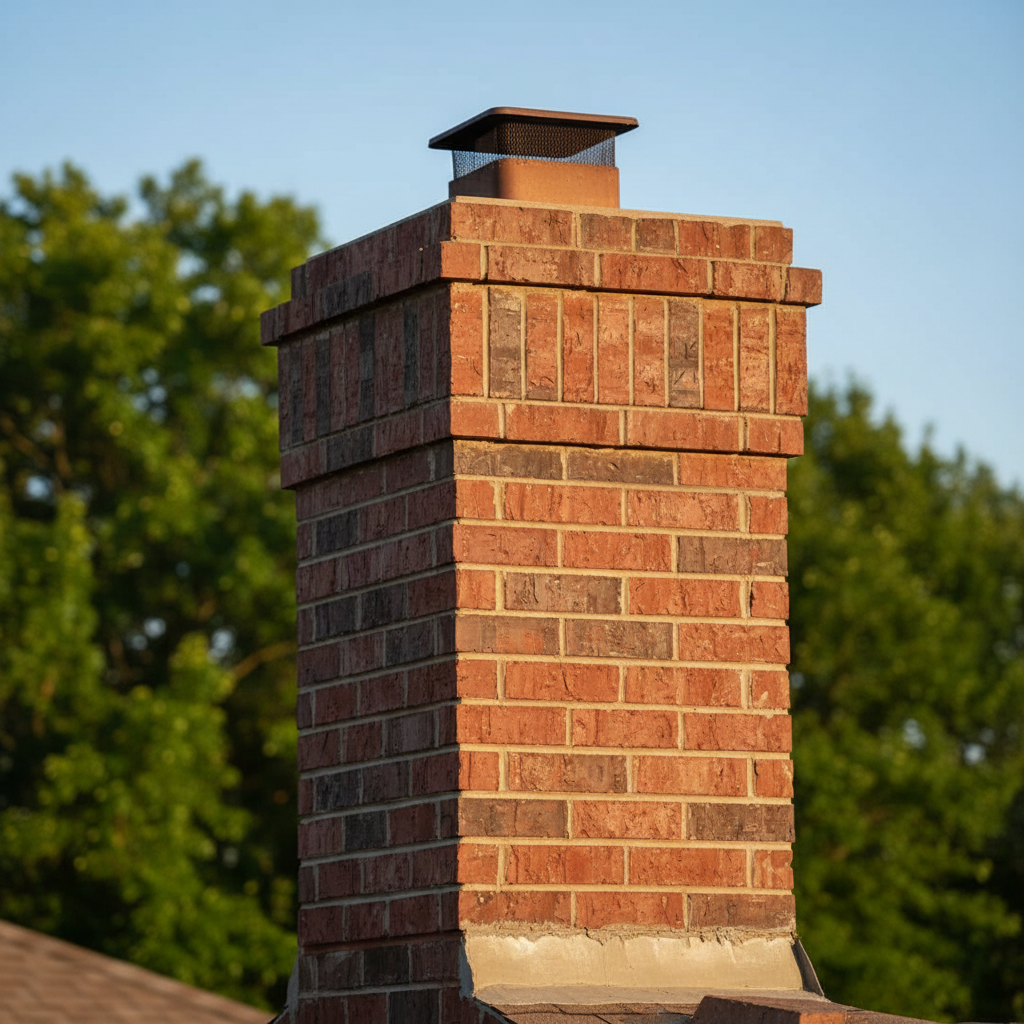
Running into chimney trouble is common, and if you live around Rosenberg, you already know our humid Gulf Coast weather and sudden downpours do brick and mortar no favors. J&S Masonry Rosenberg gets asked a lot of the same questions by homeowners trying to figure out what is going on up on their roof. We will walk through what you actually need to know about keeping your chimney safe and sound.
Why is there white powder on my exterior bricks?
That white, powdery substance you are seeing is called efflorescence. It happens when moisture gets inside your brickwork, dissolves natural salts, and pushes them to the surface as the water evaporates. In our humid climate, this is extremely common. It usually means your bricks are absorbing water somewhere, either through a cracked crown, bad flashing, or unsealed masonry. Left alone, that trapped moisture will eventually cause the brick face to pop off, a process we call spalling.
How do I know if my chimney crown is failing?
Take a look at the very top of your chimney. If you see cracks, chunks missing, or vegetation growing out of the concrete wash, your crown is failing. The crown is designed to shed water away from the flue and the top courses of brick. Once it cracks, water goes straight down into the masonry core. J&S Masonry Rosenberg ends up pouring or repairing crowns all over Fort Bend County because standard concrete gives up after years of thermal expansion and contraction.
Do I really need a chimney cap?
Yes, absolutely. A good chimney cap keeps out rain, leaves, and local wildlife looking for a cozy spot to nest. Without one, a heavy rainstorm acts like an open bucket, pouring water directly down your flue into the smoke chamber and rusting out your damper. Putting a cap on is one of the most important preventative measures you can buy for your chimney system.
What causes a smoky fireplace even when the flue is open?
If your living room fills with smoke, it usually boils down to a few culprits. Sometimes it is just a cold air block sitting in the flue, which happens when the air outside is warmer than the air in your house. Other times, soot and creosote buildup have narrowed the passage, or the smoke chamber was not built correctly to begin with. If your damper is rusted stiff and will not open all the way, that will cause smoking issues as well.
How often should my chimney be inspected?
You should get eyes on your chimney at least once a year if you burn wood regularly. Even if you never light a fire, routine checks catch small flashing leaks or hairline crown cracks before they turn into major structural repairs. Catching a minor mortar joint issue early saves you from paying for a partial rebuild down the road.
Can foundation shifts affect my chimney?
They certainly can. Rosenberg sits on expansive clay soils that shift dramatically depending on whether we are in a drought or getting drenched by tropical storms. When the ground moves, the house moves, but exterior masonry chimneys often settle at a different rate than the main framing. If you spot a vertical or diagonal crack where the chimney meets the siding, you need to have a mason look at it to check for structural separation.